
Make the harm visible
Describe what happened, where it happened and how much was damaged. Give the aftermath places and property the group can recognise.
Campaign & story
Something broke.
Someone is affected.
The party can make amends.
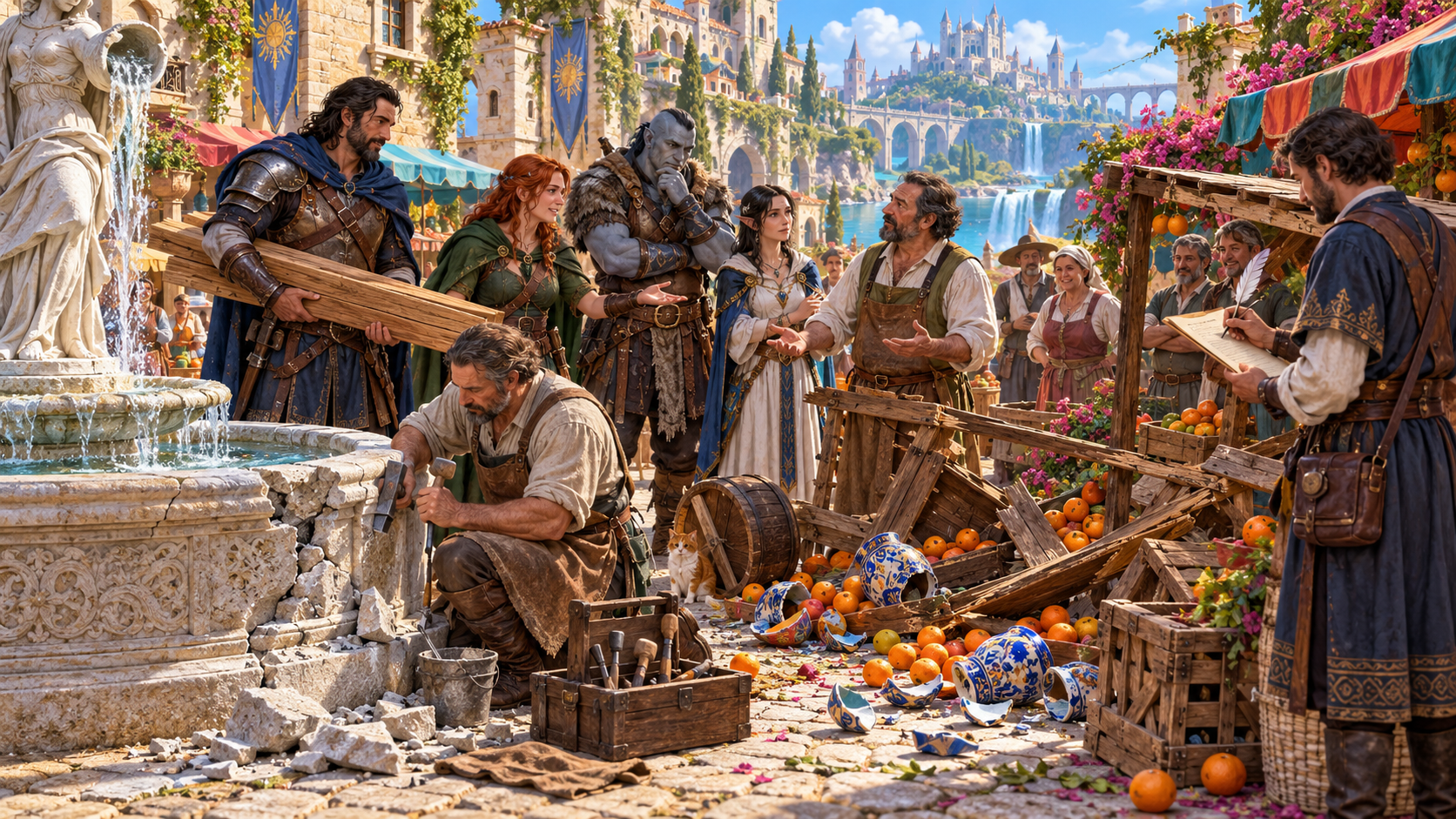
The aftermath, ready to play
Prepare the direct physical damage after a fictional tabletop incident, from the broken place to its owners, witnesses, repair costs and possible restitution.
Describe what happened, where it happened and how much was damaged. Give the aftermath places and property the group can recognise.
Consider owners, witnesses and the public story. Practical ways to make amends leave the next choice with the party.

Damaged places and their owners
A broken stall, damaged fountain or ruined bridge affects more than the scenery. Choose a place and severity, then identify its owner and reaction.
Prepare the cause and reach of the harm. Use those details to give the party an understandable aftermath they can address.
What your aftermath can contain
Choose the people, costs and responses that fit your campaign.
Begin with what happened and where. Prepare damage in a market, tavern, temple, street, bridge, dock, noble home, farmland, fortification or ancient ruin.
Set the scale from negligible damage through minor, noticeable, serious or major destruction to a landmark being lost.
Identify the affected property and the reach of the damage. Give the aftermath visible details the party can address.
Name who owns the damaged place or property and consider their immediate response to the incident.
Bring the cause and context. Deep choices include whether the party is responsible, partly responsible or framed.
Describe who saw what and who did the most damage. Give the scene people with different accounts of the event.
Prepare what repairing the harm may cost and who may be expected to pay. Your table decides how payment is resolved.
Consider the authorities and their response to the visible damage, without assigning legal guilt.
Explore how different people tell the story. Review which details the characters should hear and which remain private preparation.
Prepare practical approaches to restitution and a future hook. Give the party choices they can pursue after the immediate damage.
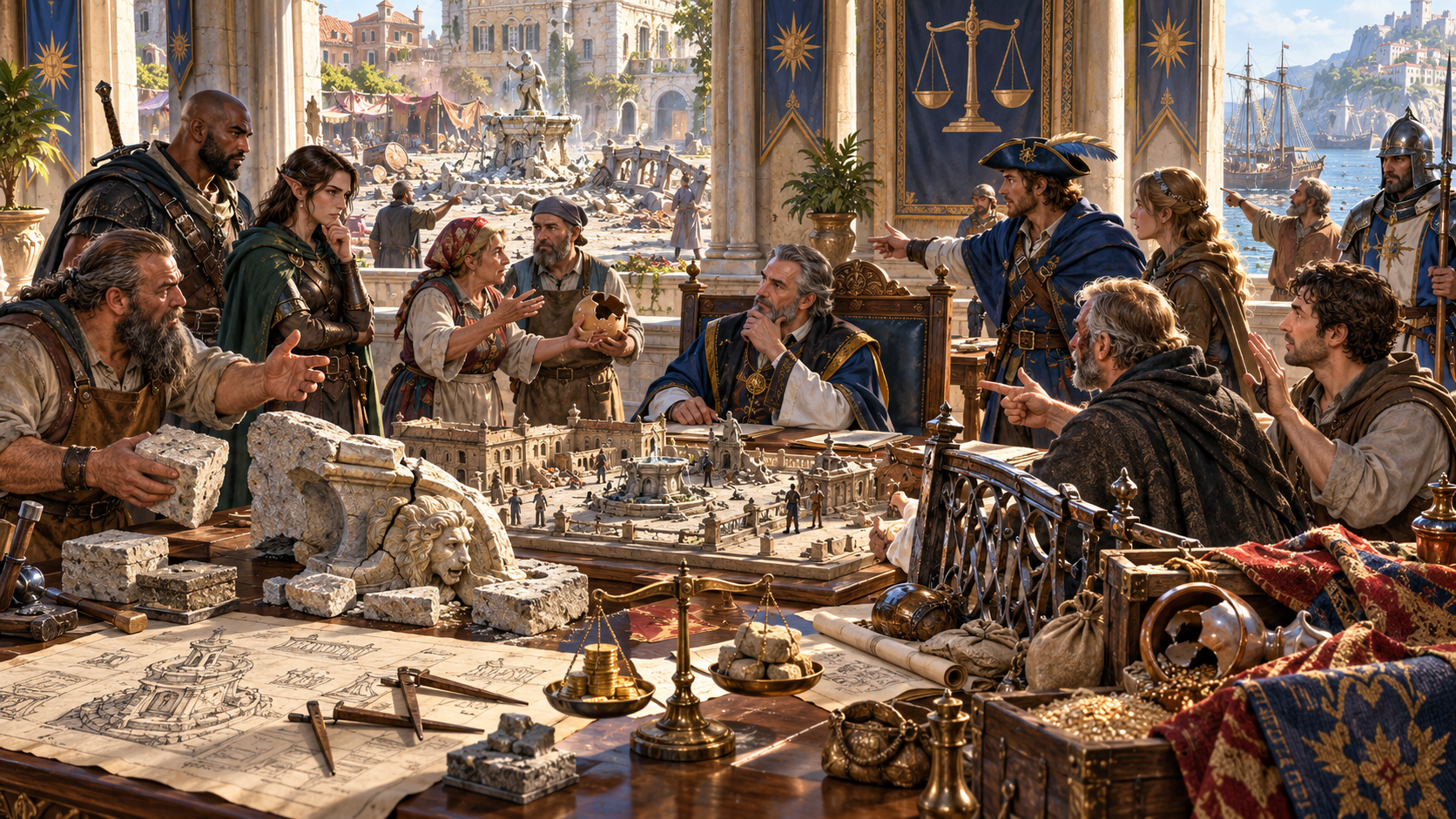
Cause, cost and response
Describe the incident, choose its location and severity, then decide whether a real table roll should trigger the damage.
Deep preparation adds cause, responsibility, witnesses and who did the most damage. Include private context and things to avoid, then review the proposed aftermath.
Quick and Deep
Bring existing campaign facts into your preparation.
Describe what happened, choose the place and severity, and set real-roll timing. Use the aftermath as a starting point for the next scene.
Describe the cause and choose whether the party is responsible, partly responsible or framed. Add witnesses and who did the most damage.
Include background that matters to the incident and subjects to avoid. Review those details before sharing the scene.
Consider the owner, repairs, authorities and public story together. Decide which suggestions fit what your campaign has already established.

Repair, restitution and memory
Repair costs, payment expectations and ways to make amends can turn visible damage into choices worth pursuing. Consider the future hook alongside the immediate repair.
Your table decides guilt, payment and each attempt at restitution. Review private preparation and choose which details to share with the characters.
Keep the table in control
Use the material as preparation and decide what happens in play.
This product focuses on damaged places and property. Use a separate product when you want a wider chain of events or a multi-stage cascade.
The generator does not assign legal guilt or declare a bystander dead. Keep those decisions with your campaign and table.
Costs and ways to make amends give the party something to consider. They do not resolve the payment or guarantee a successful repair.
It does not start or change combat or send a Combat PRO handoff. It records the aftermath while your table decides the next events.
Choose the right preparation for the next scene
Each product concentrates on its own kind of preparation.

Find your VISINVOKE products in one Windows desktop workspace.

Explore the separate product for connected stages, intervention points and a wider aftermath.
Product artwork illustrates the subject, not application screens.
Questions and answers
Damage, responsibility, boundaries and account access at a glance.
It prepares the aftermath of direct physical damage: what broke, who owns it, witnesses, repair costs, official and public responses, and practical ways to make amends.
Choose a severity from negligible damage through minor, noticeable, serious or major destruction to a landmark being lost. Match the scale to the incident and your campaign.
Quick chooses the incident, place, severity and real-roll timing. Deep adds cause, responsibility, witnesses, who did the most damage, things to avoid and private context.
Yes. The approved product information includes those preparation choices. Your table decides what actually happened, how people respond and what follows.
No. It records the aftermath without making those decisions. It does not start or change combat or send a Combat PRO handoff.
Use your VISINVOKE account and open the Generators collection in Desktop Control Centre on Windows. Individual subscription access and current pricing are managed through your account.
Continue in VISINVOKE
Create a free VISINVOKE account or sign in to your existing account. Access Desktop Control Centre through your account installer page.
Open the Generators collection on Windows. View current subscription and access details in your account.